New Year, New Books, Better Property Management
Make 2027 the Year Your Property Runs on a Budget
By David Crown, Founder and Chief Executive, L.A. Property Management Group
A new year brings new goals, new plans and, inevitably, a few resolutions that will be forgotten by February. But if you own an income property, there is one resolution worth keeping in 2027: build a realistic property budget and actually manage it.
That second part matters. Creating a budget once a year and filing it away is not financial management. A budget should be a living roadmap for your property. It tells you what the property should produce, what it should cost to operate and, most importantly, when reality starts drifting away from the plan.
For multifamily owners in particular, where rising insurance, utilities, repairs, labor and regulatory costs can quickly squeeze margins, disciplined budgeting has become increasingly important.
A Budget Is Only Useful If Someone Is Watching It
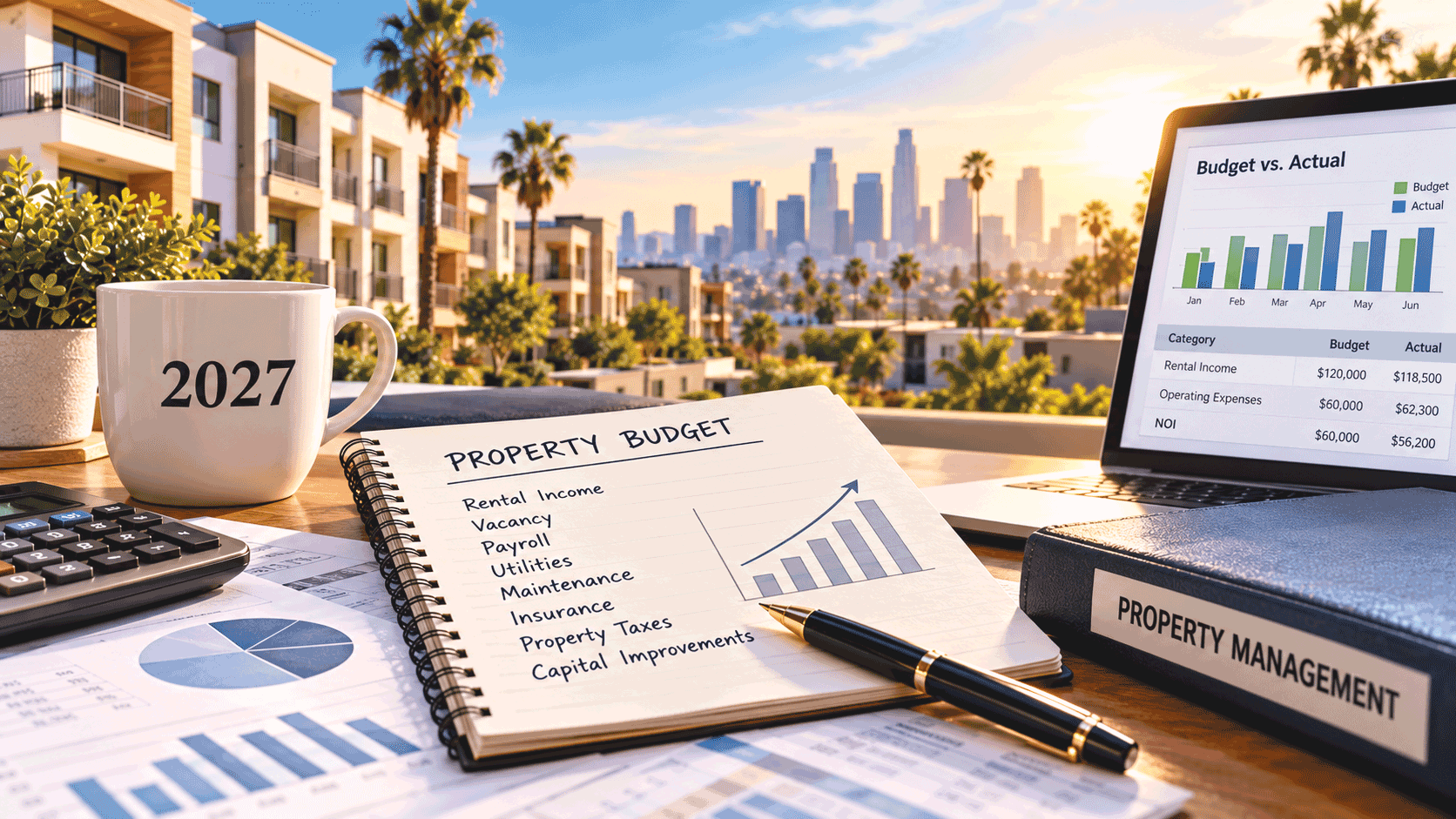
A good annual budget should account for expected rental income, vacancy, payroll, utilities, maintenance, insurance, taxes, recurring contracts and anticipated capital expenditures. It should also be based on the property’s actual operating history, not optimistic guesses.
But creating the budget is only step one. Each month, actual results should be compared against that budget. If repairs were projected at $8,000 and you are already spent at a $7,000 level three months into the year, you need to know why. Was there an unusual emergency, or is there a recurring maintenance problem? If water expenses are suddenly 15% over budget, is it a rate increase or potentially a leak?
The numbers tell you where to look. Good management determines what to do next. That is why property accounting should be closely connected to property operations.
Accounting Should Do More Than Count the Money
At my property management company, Los Angeles Property Management Group, we believe property accounting should go well beyond collecting rent, paying invoices and sending an owner statement at the end of the month. Our approach is built around giving owners financial visibility into what is actually happening at their properties. That starts with building a thoughtful annual budget and continues with monitoring performance against it throughout the year.
When an expense is running above budget, the conversation should not end with, “That’s what we spent.” We ask ourselves: Why did we spend it? Is it temporary? Is it likely to happen again? Can we reduce it? Does the budget need to be adjusted? Those are management questions, not simply accounting questions.
We want our accounting and property management teams speaking the same language. Maintenance activity, vendor invoices, rent collections, delinquency and property-level financial reporting should all contribute to a clearer picture of a property’s performance.
Small Variances Can Point to Bigger Problems
Very often, seemingly minor variance point to far bigger issues. We have seen the value of this firsthand. At one multifamily property we took over, ownership knew expenses seemed high but did not have reporting that made it easy to determine where the money was going. Once expenses were properly categorized and compared against operating expectations, several areas stood out. That gave the management team specific expenses to investigate rather than simply telling the owner that “costs are up.”
At another property, a recurring expense began consistently exceeding expectations. Instead of treating it as the new normal, the team investigated what was causing the variance. The underlying operational issue could then be addressed and it was.
Neither example makes for a Hollywood blockbuster. But identifying a few hundred dollars here and a few thousand dollars there is exactly how stronger property operations protect net operating income (NOI) over time.
Your Property Management Team Should Be Held Accountable to the Budget, Too
Owners should expect their management company to help build the budget and then take responsibility for monitoring it, and also for achieving it and even exceeding NOI goals. That means reviewing budget-to-actual performance regularly, identifying meaningful variances, explaining why they occurred and determining whether corrective action is needed. But, of course, no budget survives an entire year exactly as written. A water heater does not care about your budget spreadsheet before deciding to fail. Insurance premiums change. Vacancies happen. Emergency repairs happen.
The goal is not to hit every line item of the budget perfectly, although that would be ideal. The goal is to understand why you are off budget and respond intentionally. The distinction is important.
If expenses are 10% above budget but nobody can explain why, you have a problem. If they are 10% above budget because of a planned decision that should reduce future operating costs, that is an entirely different story.
Start 2027 With a Financial Plan, Not Just Financial Statements
As you evaluate your property management heading into 2027, ask more than, “Are my books accurate?” Ask whether your manager prepares a detailed annual budget. Ask how frequently actual performance is measured against it. Ask who investigates variances. Ask whether accounting communicates with the people actually managing and maintaining your property. And ask whether your monthly financial package helps you make decisions or simply documents decisions that have already been made.
Clean books are essential. But they are also the starting point, not just the finish line.
David Crown is the Chief Executive Officer of Los Angeles Property Management Group and has over 30 years of experience managing all types of income properties. He can be reached by telephone at (323) 433-5254.