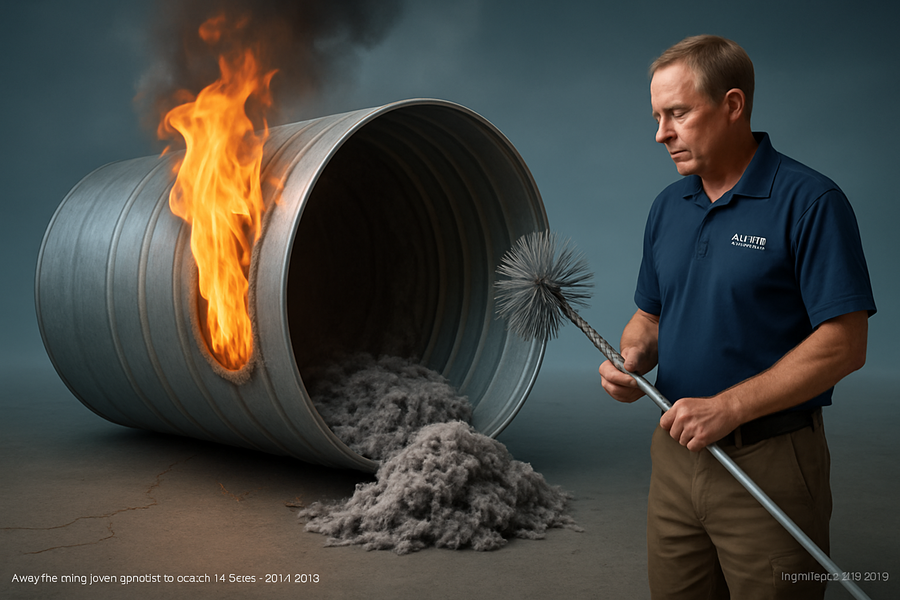
A Hidden Fire Risk: Why Dryer Ducts at Your Property Matter More Than You Think!
By Dan Stradford, President, Action Duct Cleaning
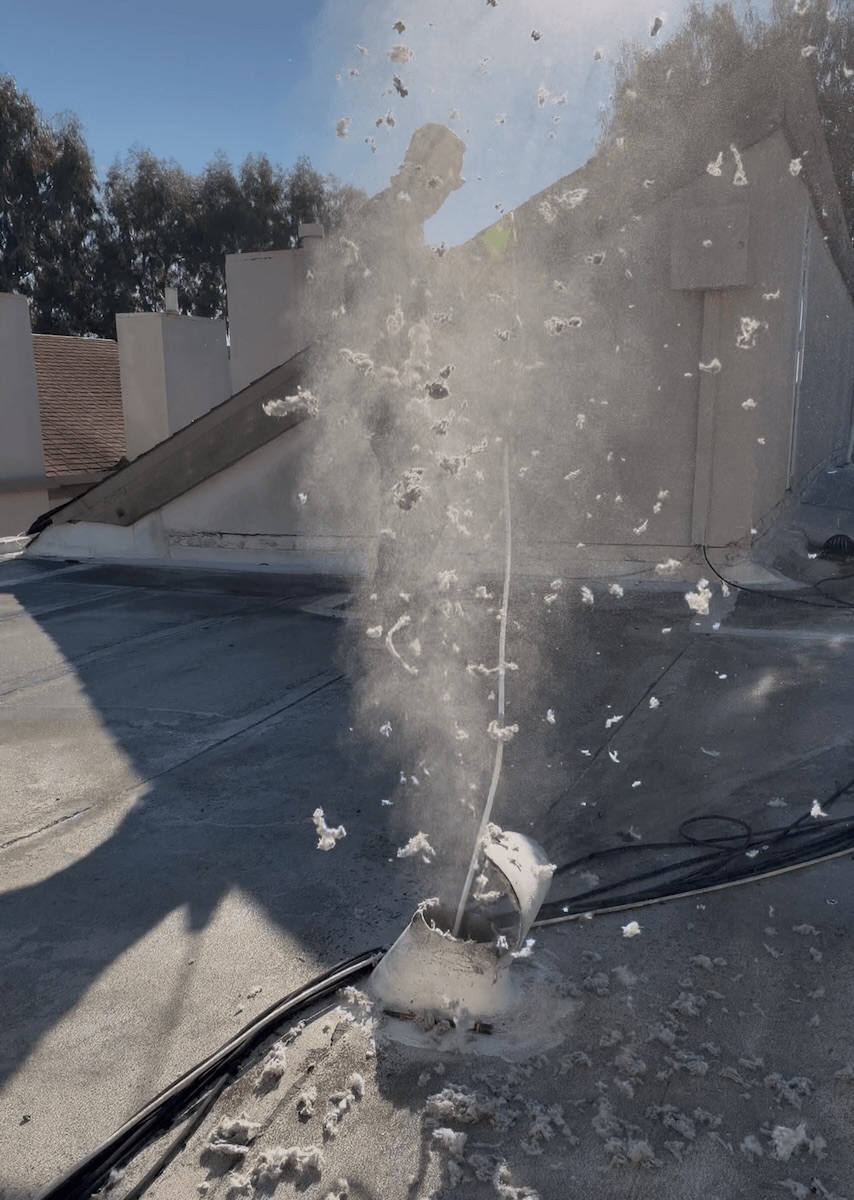
Andy Farr using brush agitation to extract lint debris from a rooftop dryer duct.
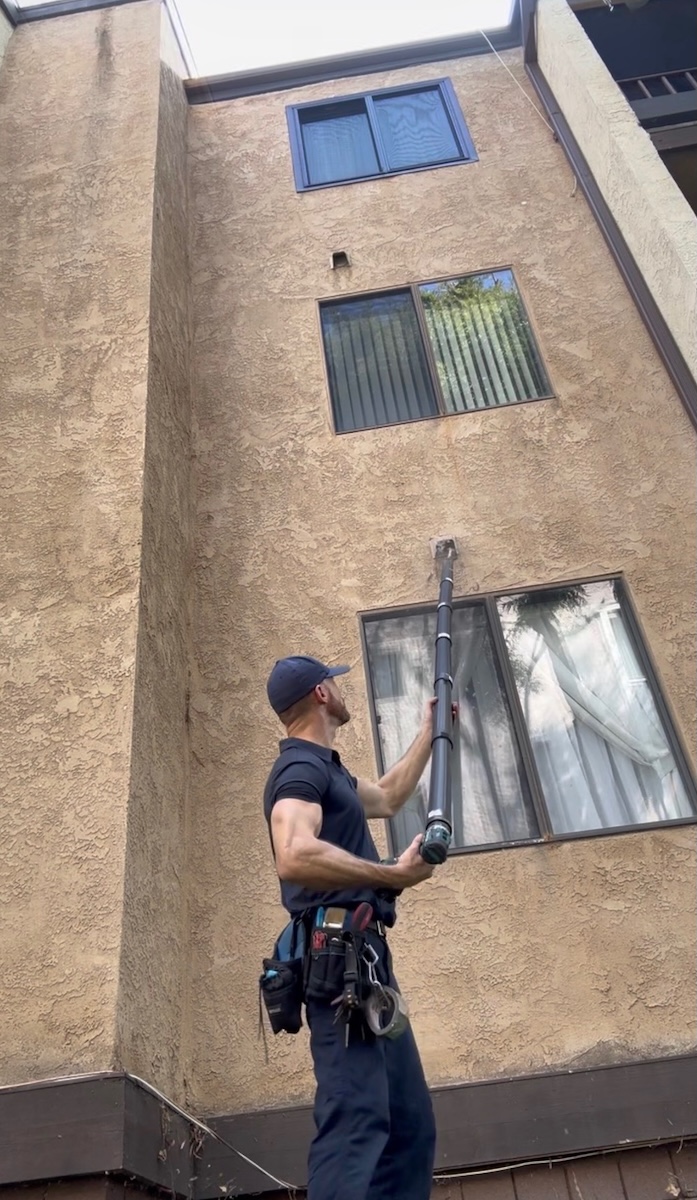
Andy Farr extracting lint debris from a dryer duct using telescopic brush agitation.
“Mi casa es su casa.”
It’s a beautiful Spanish phrase meaning, “My house is your house.” But in condominiums or apartment living, it carries a more sobering message. If your “house” catches fire, you bring that threat or devastation to your neighbor’s doorstep.
According to the National Fire Protection Association (NFPA), about 15,000 dryer fires happen in the U.S. every year. A third of those come from lint buildup in the dryer and dryer duct. This is so much of a problem that the NFPA says, “Once a year, or more often if you notice that it is taking longer than normal for your clothes to dry, clean lint out of the vent pipe or have a dryer lint removal service do it for you.”
How do you know when your dryer duct has too much lint buildup? A common sign is that the clothes are taking longer to dry. A clothes dryer works by pulling moisture from the clothes and sending it to the outside as water vapor through a four-inch-wide duct, also called a vent. Over time the lint builds up and narrows the diameter of the duct, restricting the amount of vapor that can be released over time until the dryer may take two, three, or even four times longer to dry. A clean dryer duct typically moves air at 100 to 200 cubic feet per minute (CFM). Lint buildup can drop this in half or more. It’s math: If you need to move 3,000 CFM to dry a load of clothes, normally a 30-minute cycle at 100 CFM, but your dirty dryer duct is moving 50 CFM instead of 100 CFM, the clothes will take twice as long – two cycles – to dry.
The result is a lot of wasted energy and more wear and tear on your dryer, not to mention having to occasionally wear a damp shirt or blouse to work. And where does the heat and moisture go if it can’t exit the dryer via the duct? Into your apartment, of course, creating a great environment for mold buildup, a muggy living room, and higher air conditioning bills. Oh, and don’t forget those black socks with the mysterious lint balls you have to pick off while you’re late for work.
Single-family homeowners typically end up calling a dryer repair service and paying for a service call they don’t need because the problem is not the dryer but a clogged or restricted duct. But dryer ducts in apartments are often more complex than those in a house. They often require long runs of ductwork and turns to reach an outside wall, both of which restrict and slow airflow, allowing lint to settle more rapidly and heavily than it would in a short duct with no bends. We’ve found some apartment ducts so restricted in air flow due to their length and turns that the building contractor had to add a “booster fan” in the middle to keep the vapor flowing out – a fan that traps lint faster than a duct, thus adding more restriction and fire hazard to the system.
And let’s not forget the “I” word: Insurance. Most insurance contracts include sections called Conditions and Exclusions. A typical exclusion found is: “Damage due to lack of maintenance, neglect or aging of property.” Yes, the insurance company can challenge an insurance claim because of a lack of dryer duct maintenance.
We can’t discuss dryer ducts without mentioning the second most common reason they can remove moisture from the dryer (besides being filled with lint): Smashed, blocked or disconnected ducts. We see this all the time. We look behind the dryer and the duct connecting the dryer and vent in the wall is flattened. We find a bird’s nest is built inside the outdoor opening of the duct. Or when we pull out the dryer, we see the connecting duct from the dryer to the wall is completely disconnected. This last one won’t block airflow, but it will fill your laundry room with heat and moisture that should be going outside. So, who cleans these things? This is a fire hazard, so you want it done right. Look for companies that are insured and that are members of professional associations that set the standards for dryer duct cleaning, like the National Air Duct Cleaners Association (NADCA) or the National Chimney Sweep Guild (NCSG).
 Dan Stradford has been president and co-founder of Action Duct Cleaning, since 1978. He served as a board member of the National Air Duct Cleaners Association for nine years as well as their Ethics chairman, senior technical writer, and lead scientific research chairman, conducting research across the U.S. on energy savings from HVAC cleaning. He has authored over 250 articles internationally and two books. For more information, contact Action Duct Cleaning at (626) 791-7870 or visit their website at https://actionduct.com/.