Build-to-Suit Net Leased Properties
By Christopher Miller, MBA
Specialized Wealth Management
March 1, 2026
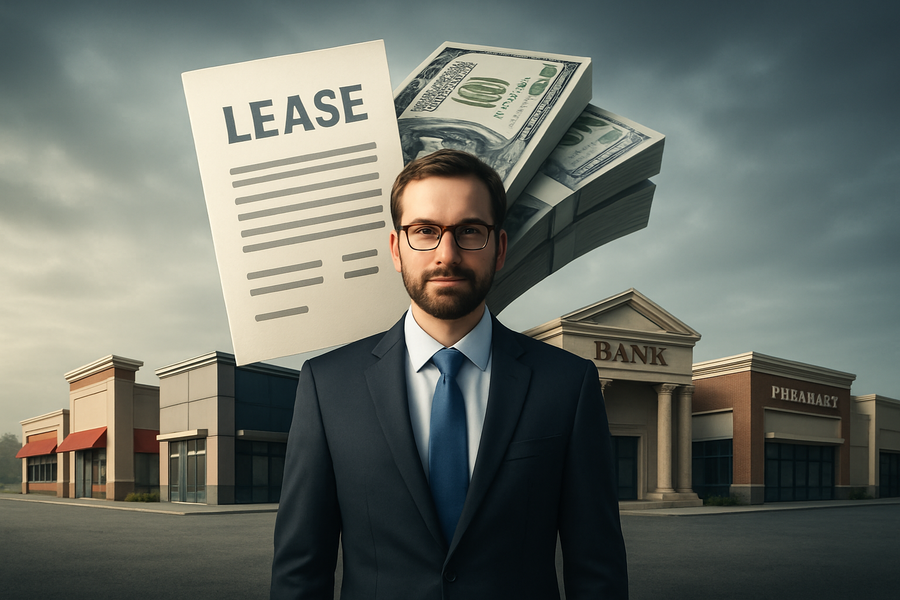
In December of 2025, my real estate brokerage partners and I helped an investor close a $32 million exchange with 6 purchases of Net Leased properties throughout the country. All these properties were 100% leased to national tenants such as Caliber Collision, Mavis Tire, Starbucks and Tractor Supply Company and most of them were build-to-suit properties. This month, we’ll explore what build-to-suit properties are and why they can be attractive to investors.
What is Build-to-Suit
Large companies typically have very specific requirements for their properties. Mc Donald’s, for example, does a lot of research about where they should locate their restaurants to maximize traffic. Not only does McDonald’s want corner lots for easy access, their studies are so detailed that they know which corner of an intersection they want to put their restaurant on – the north, south, east or west. (Which one it is depends on the individual location.)
Once Mc Donald’s has identified a location for a restaurant, they will hire one of their preferred developers to construct the building. A preferred developer is familiar with the company’s design requirements and has a track record of success with the company.
Mc Donald’s will first sign a lease agreement, then the developer will typically construct the restaurant using their own financing. Upon completion of the building and the restaurant’s opening, the property will be sold to an investor to make everyone happy. McDonald’s has a restaurant to run, the investor has a predictable stream of cash flows, and the developer has been paid for their work – and can then go build another property.
Advantages of Build-to-Suit Properties
Build-to-suit tenants will usually sign a long-term lease for the property in order to provide maximum sales value to the developer. As with any leased property, one risk is that the tenant may elect to move out after their lease term expires. This lease can be decreased with build-to-suit properties. After all: the tenant had the property built exactly the way they want it.
If the tenant does decide to move out, we have a property that would be very attractive to their competitors, because a lot of research and industry expertise went into choosing the location and constructing the building. If Starbucks decides to move out, we have a very well-located drive through that would be attractive to major food service chains. If Amazon moves out of our warehouse, we have a very well-located distribution center that was constructed with all the latest technology.
What I Look For in Build-to-Suit
When evaluating Build-to-Suit properties, I will first focus on the tenant. Is the tenant a large and financially successful company that I feel confident will stay in business to pay me rent over the entire lease term?
Next, I’ll focus on the location. Is the property in a growing metropolitan area that will provide customers for my tenant? If my tenant decides to leave at the end of their lease term, is this area in demand from alternative tenants? I receive NNN listings over e-mail every day from other real estate brokers. Some of these listings feature Dollar General stores in rural Arkansas that have 2,000 people living in a 10-mile radius. I want to avoid investments like that: who will want to lease that store from me if the tenant moves out?
I’ll also take a close look at the lease terms. Is the lease NN or NNN? Are rent increases built into the lease? How many extensions are there? Walgreens was known for signing 20 year leases with another 50 years of extensions – with no rent increases at all. This means that – with 3% annual inflation – your $500,000 annual rent today would have $59,300 of buying power in 2096. Best to look for a property with more favorable terms.
Our Recent Build-to-Suit Success Story
At the beginning of this article, I mentioned a client who came to me with a problem. For a tax-deferred exchange, he needed to buy $32 million worth of Net Leased Properties. With our real estate and lending partners, we were able to help him purchase a nice portfolio of 6 properties nationwide. His acquisitions featured tenants such as Mavis Tire (3,500 locations across the US and Canada), Caliber Collision (over 1,950 locations), Tractor Supply Company and Starbucks. All these properties have minimum terms of 10 years, were sold at around 6% CAP Rates, have rent increases built into their initial terms and extensions and are located in robust metropolitan areas. Our client was very happy with the results and with the income from his new portfolio; and with our fast work arranging financing and closings.
Could Build-to-Suit Help You?
Could Build-to-Suit Net Leased property be right for your next exchange? Call my office at 877-313-1868, and I’d love to talk with you about it.
Christopher Miller is a Managing Director with Specialized Wealth Management in Tustin, California and specializes in tax-advantaged investments including 1031 replacement properties. Chris’ real estate experience includes work in commercial appraisal, in institutional acquisitions for a national real estate syndicator, and as an advisor helping clients through five hundred and fifty 1031 exchanges. Chris has been featured as an expert in several industry publications and on television and earned an MBA emphasizing Real Estate Finance from the University of Southern California. Call him toll-free at (877) 313 – 1868.
Securities offered through Emerson Equity LLC, member FINRA/SIPC. Emerson Equity LLC and Specialized Wealth Management are not affiliated. All investing involves risk. Always discuss potential investments with your tax and/or investment professional prior to investing.