Preparing Today for Tomorrow’s Earthquake Risk
Earthquake research continues to improve our understanding of how seismic events may affect California’s communities. While scientists cannot predict exactly when the next major earthquake will occur, new studies are helping property owners better understand why preparation remains essential.
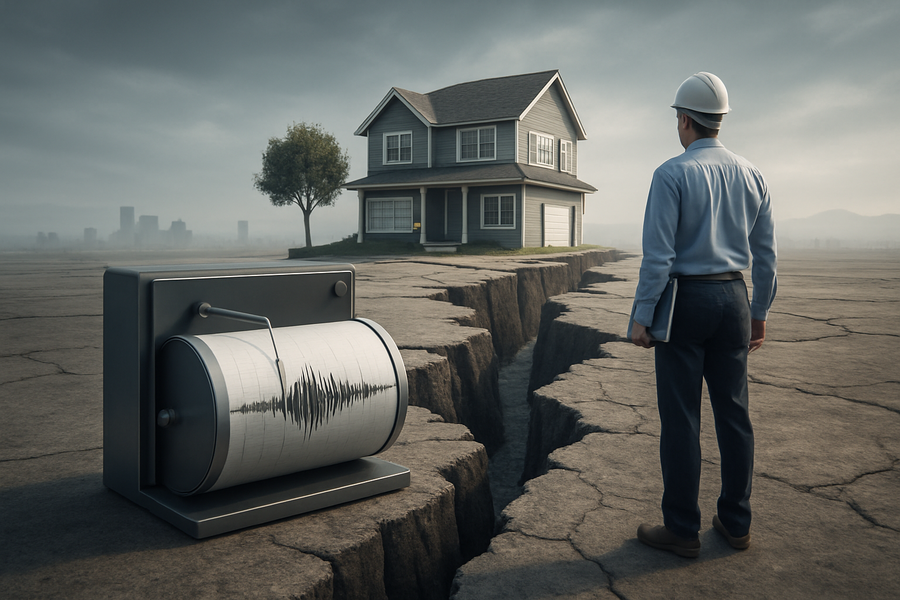
A recent study examining the southern San Andreas and San Jacinto fault systems found that tectonic stress has reached some of the highest levels observed during the past 1,000 years. Researchers also identified what they describe as an “earthquake gate” near the Cajon Pass, a junction that may influence whether a future earthquake remains confined to one fault or spreads across multiple fault systems.
According to the researchers, if a large rupture were to move through this junction, the effects could extend across much of Southern California, including Los Angeles, San Bernardino, Riverside, and the Coachella Valley. While the study does not predict when an earthquake will occur, it reinforces the importance of preparing for future seismic events.
For rental housing providers throughout Southern California, this message is especially relevant.
From San Diego to the Inland Empire, multifamily properties are located within a region shaped by active fault systems. Although every earthquake is different, one fact remains consistent: buildings that are prepared before an earthquake generally perform better than those that are not.
Seismic retrofitting is one of the most effective ways property owners can strengthen vulnerable buildings.
Many multifamily properties throughout Southern California were constructed before current seismic standards were adopted. Older soft-story buildings and other aging structures may be more susceptible to damage during a significant earthquake. Seismic retrofitting helps strengthen these buildings so they can better withstand earthquake forces and improve overall structural performance.
Preparing a building before an earthquake occurs can help reduce structural damage, minimize repair costs, and support a faster recovery after an event. Buildings that experience less damage are often able to return to service more quickly, helping reduce disruption for residents while preserving valuable housing within the community.
Preparedness also includes emergency planning. Property owners can improve readiness by developing emergency response procedures, securing heavy objects in common areas, educating onsite teams about earthquake safety, and encouraging residents to maintain emergency supplies. These actions complement structural improvements and help create a safer environment for everyone.
The recent research offers another important reminder. Earthquake preparedness is not based on fear or speculation. It is based on understanding risk and taking practical steps before the next earthquake occurs.
For rental housing providers, seismic retrofitting remains a proactive investment in protecting residents, preserving property value, and improving the long-term resilience of multifamily housing throughout Southern California. Preparing today can help reduce uncertainty and support a faster recovery when the next major earthquake occurs.
Sources
1. Journal of Geophysical Research: Solid Earth led by Liliane Burkhard
2. Research conducted by the University of Bern, University of Hawaiʻi at Mānoa, United States Geological Survey, and Scripps Institution of Oceanography
3. News coverage of the study discussing the Cajon Pass “earthquake gate” and Southern California seismic stress conditions (2026)
About Optimum Seismic, Inc.
The Optimum Seismic team has been making California cities safer since 1984 by providing full-service earthquake engineering, steel fabrication and construction services for multifamily residential, commercial and industrial buildings. With more than 4,000 earthquake retrofit and renovation projects completed, Optimum Seismic’s work includes soft-story multifamily apartments, tilt-up, non-ductile concrete, steel moment frame and unreinforced masonry (URM) buildings. To arrange a complimentary assessment of your building’s earthquake resilience, contact Optimum Seismic at (833) 978-7664 or visit optimumseismic.com.