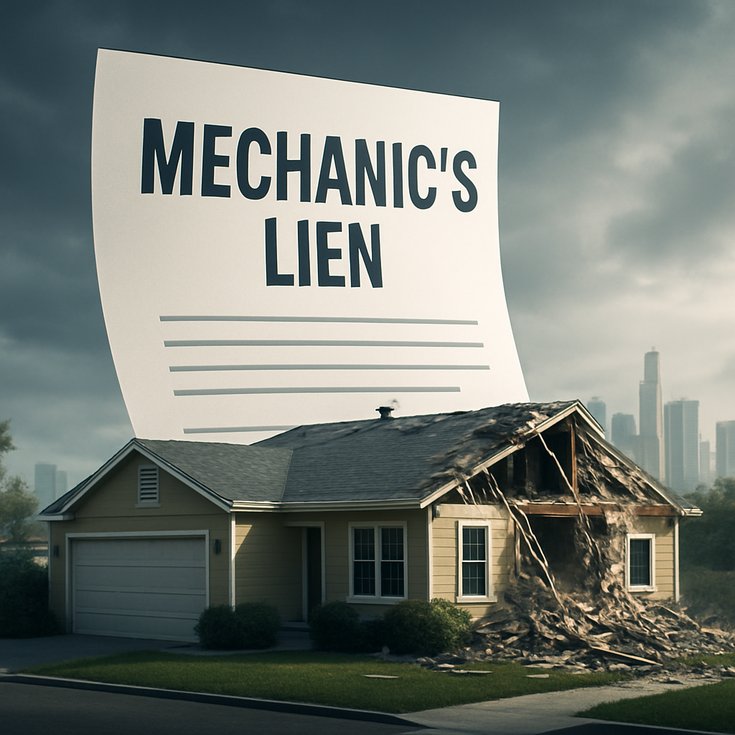
Paper Liens, Real Damage
Across California, property owners are increasingly uncovering a quiet but disruptive problem: mechanic’s liens recorded against properties for work that was never performed. While this issue is most prevalent in Los Angeles County, similar cases are also surfacing in Orange County, San Diego County, Santa Clara County and San Francisco County – particularly in markets with high property values and active transaction volume.
These false or abusive liens—sometimes referred to as “paper liens”—can cloud title overnight, delay sales, stall refinances, and introduce unnecessary legal risk for owners who often have no idea a lien exists until escrow or underwriting is already underway.
How False Mechanic’s Liens Get Filed
The issue stems from how mechanic’s liens are recorded in California. The county recorder’s office does not verify whether work was actually performed, whether the claimant had a valid contract, or whether the amount claimed is accurate. If a lien is properly formatted and submitted within statutory timeframes, it is recorded as a matter of process.
This creates an opening for abuse. In practice, false liens may be filed by individuals or entities that never worked on the property, by vendors attempting to gain leverage in unrelated disputes, or by third parties using publicly available ownership data to target valuable assets. Once recorded, the lien immediately becomes part of the public record, regardless of its legitimacy.
Why Los Angeles County Sees the Highest Concentration
Los Angeles County stands out not because the law is different, but because the economics are. Higher property values, a dense concentration of multifamily and mixed-use assets, frequent ownership transfers, and an exceptionally active development and renovation market all increase the payoff for filing a lien—legitimate or not.
One of the more notable recent cases involved Rita Ortiz, who was accused of filing hundreds of millions of dollars in fraudulent mechanics liens against properties she had no connection to, effectively clouding title and disrupting ownership. She was also allegedly illegally occupying a rental property and had filed a restraining order against the owner.
That said, Orange County and other California markets are not immune. As awareness of this tactic spreads, owners across the state are encountering similar issues, particularly in multifamily properties where timing and certainty are critical to transactions.
Why These Liens Create Real Problems—Even When They’re False
A mechanic’s lien does not need to be valid to be disruptive. Title companies typically treat any recorded lien as a serious encumbrance and are reluctant to insure over it. As a result, a single false filing can delay or derail a sale, freeze a refinance, or force an owner into legal action simply to clear title, and even when a lien is eventually removed, the cost—in time, legal fees, and lost leverage—can be significant.
How Owners Can Reduce Exposure
Owners can’t prevent someone from attempting to file a lien, but they can reduce risk. Clear written contracts, disciplined vendor management, and consistent use of conditional and unconditional lien releases help limit exposure from legitimate contractors. Just as important is ongoing visibility into title, rather than waiting until a transaction is pending.
How to Check Whether Your Property Has a Lien
Owners can check for mechanic’s liens or other title issues by searching county recorder records using their property address or APN. Another approach is to have a title company run a “date-down” or ownership and encumbrance report periodically, even when no sale or refinance is planned; I work with a title partner to provide this level of visibility for property owners who want to avoid surprises.
A Quiet Risk Worth Paying Attention To
False mechanic’s liens are not limited to Los Angeles County, but that is where they are most visible. As the tactic spreads, apartment owners across California—particularly those with valuable or frequently traded assets—should view title monitoring as a core part of asset management, not a last-minute escrow issue. Owners who stay proactive protect not only their transactions, but their leverage.
By: Mercedes Shaffer, Broker
Mercedes Shaffer is a multifamily real estate broker, serving Orange County and LA County. For questions about buying, selling or 1031 exchanges, contact her team at 714.330.9999, InvestingInTheOC@gmail.com, or you can visit their website at InvestingInTheOC.com BRE 02114448 REAL Brokerage